
Morph 4K
A complete 4K video scaler, with the most advanced CRT simulation and deinterlacer ever on an FPGA scaler.
Everything it does.
The Morph 4K turns retro and modern sources, up to 1080p, into 4K60 HDMI with 4:4:4 color, HDR10 and a 12-bit linear light pipeline: for consoles, handhelds and PCs alike.
Scaling and deinterlacing for every source
- Lanczos and cubic scaling with anti-ringing, plus Sharp Bilinear.
- A state-of-the-art motion-adaptive deinterlacer with Edge Smoothing.
- Film mode (inverse telecine) recovers the original frames of 30 fps PS2 games and DVD films.
- Auto Sampling finds each analog mode's true pixel grid, and Auto Phase lines up on the center of every pixel.
Smoothing, rotation and downscaling
- Super-xBR with our perceptual enhancements, on sources up to 1080p.
- Rotation for vertical games, with Auto Rotation, at one frame of latency.
- The Rational Decimator recovers native pixels from modern retro ports.
- xBRZ and Super Eagle for pixel art.
Low latency and smooth motion
- Ultra-low-lag and fully buffered framelock modes, with MagicLock2.
- VRR and Black Frame Insertion.
- Beam Scan for CRT-like motion clarity.
- Every effect, including CRT simulation, adds lines of delay, not frames.
Best-in-class CRT simulation
- A physical model of the whole display, from the analog signal to the bezel.
- Energy-conserving scanlines and Phosphor Glow keep the picture bright.
- HDR lifts highlights well above SDR white.
- Start from the PDM-20 virtual CRT or real-TV presets.
Connects to everything
- HDMI in up to 1080p60.
- Composite, S-Video, SCART RGB, component and VGA with the Analog Bridge.
- 4K60 4:4:4 HDMI out with HDR10.
- Game-ID and controller menu control with a Retro G.E.M.
Built to expand
- WiFi updates and a Web Interface with a live mask creator.
- Analog Bridge, available now.
- Planned: analog output card (release date TBD).
- A case that opens with a screwdriver.
One box, four engines.
The Morph 4K is reprogrammable hardware. Instead of one pipeline that does everything at a compromise, it loads a Processing Engine built for the job.
240p and 480i consoles
The full Beam-to-Glass CRT simulation and the PDM-20 virtual CRT.
Any input
Heavy 480i, 3D, video and PC sources. Film mode (inverse telecine) and Edge Smoothing.
Progressive sources
3D and pixel art, with Super-xBR, xBRZ and Super Eagle.
Vertical arcade games
Rotated upright for a normal TV, at one frame of latency.

The Processing Engine menu shows your input and marks the best engine for it.
A physical model of the whole display.
The look we remember came from a chain of real hardware. Firmware v4 simulates that chain live on real consoles, at 4K60, inside the FPGA.
- Signal
- Console
- Encoder
- Cable
- Decoder
- Display
- Beam
- Mask
- Glass
- Bezel


Tune it while the game runs.
The CRT Simulation menu is laid out in the order the signal travels, with a built-in description for each setting. Save presets per game with Game-ID, or start from the PDM-20 or one of the Real Sets.

24 real CRTs, connected the way you remember.
Every Real Sets preset is built from that set's own service manual and factory specifications. Then it's connected the way the set really was: RF into the living-room Trinitron, S-Video into the Commodore 1702, RGB into a broadcast BVM.
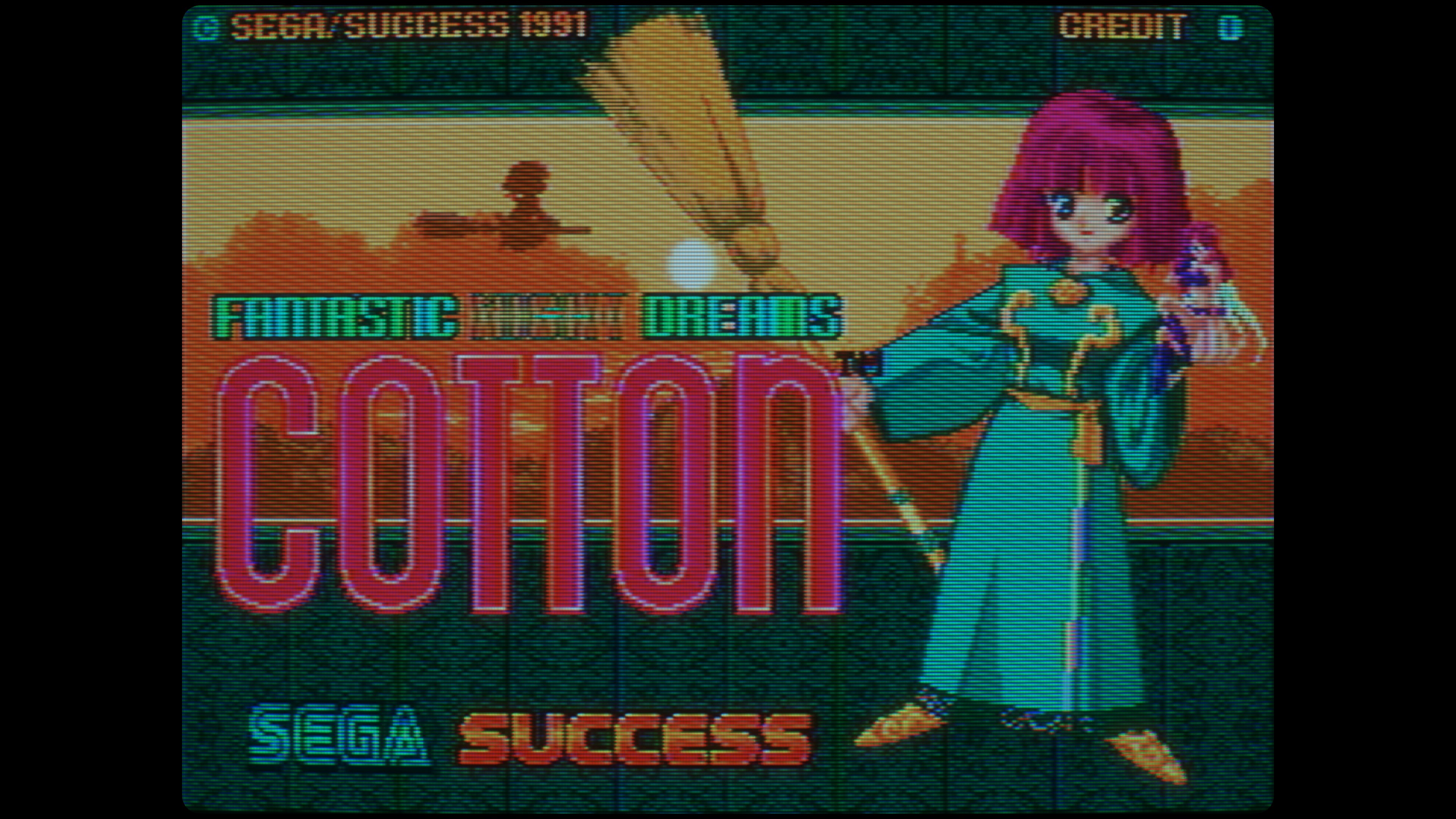
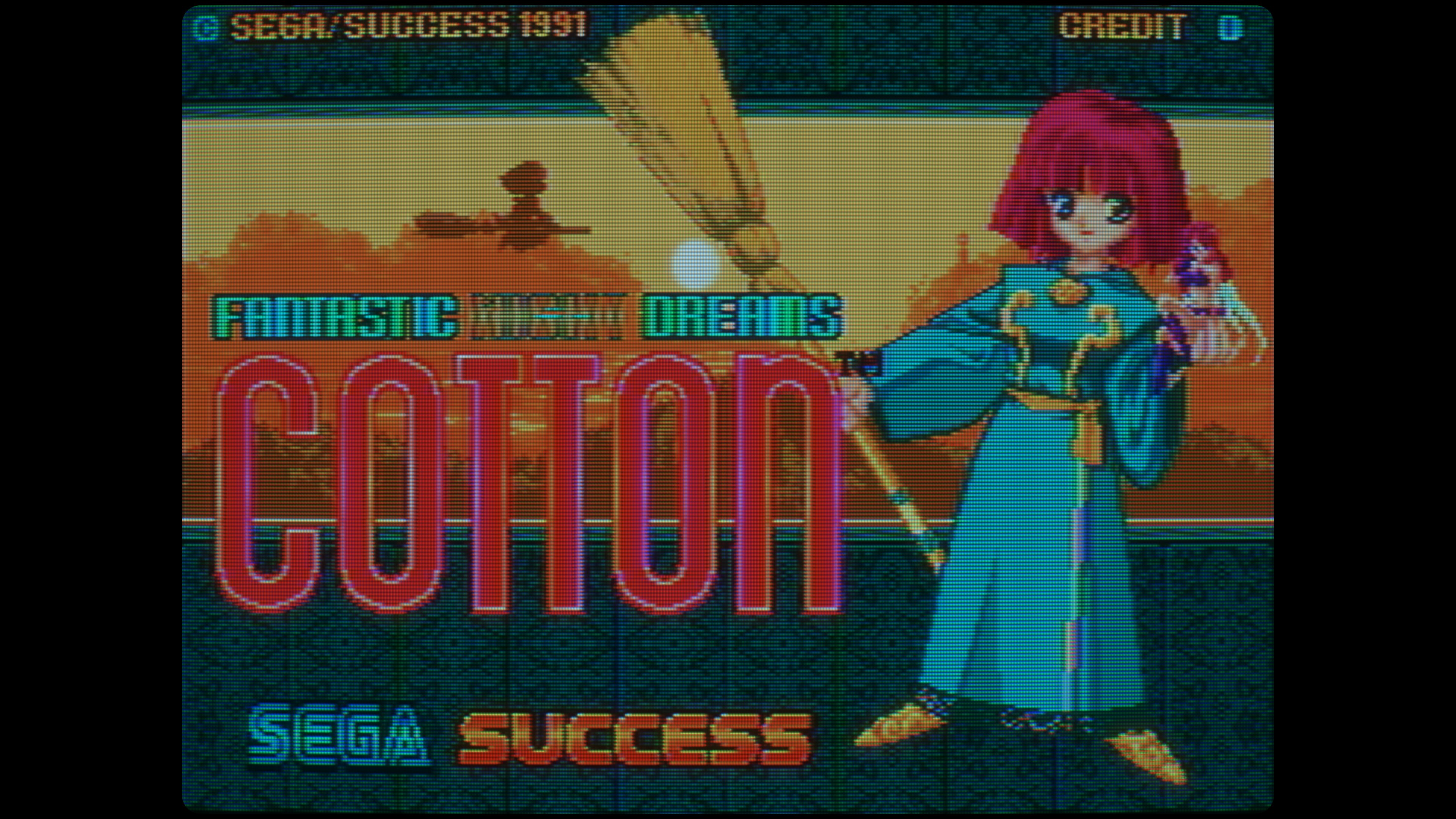
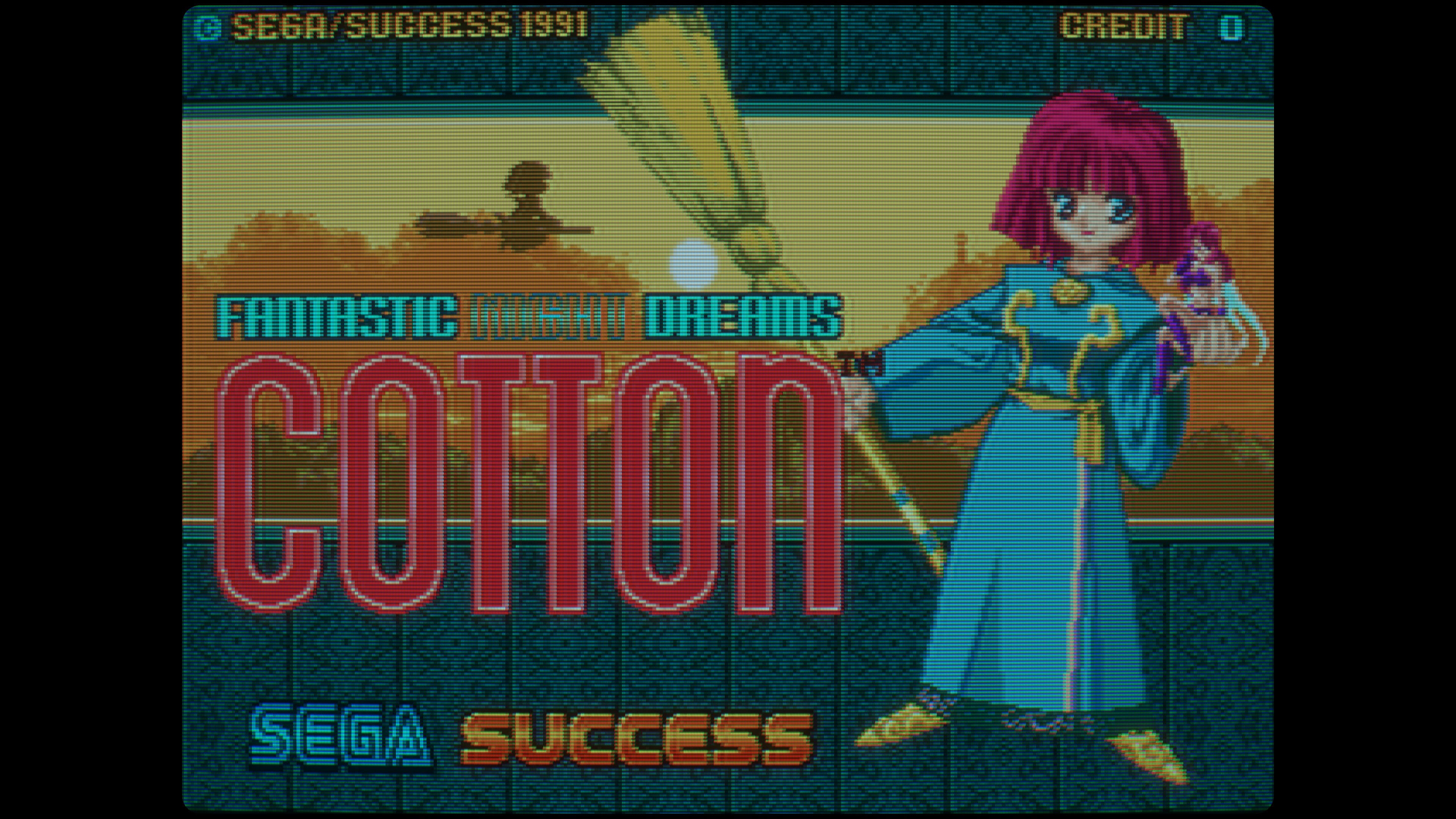
One frame of Cotton through the Sony KV-25XBR's three inputs, captured from the Morph 4K's 4K output. Click a picture for the full frame.
24 sets68 presets5 kinds of input
Download them on the Morph 4K itself: Presets → Download/Update presets via WiFi. Then tweak any stage, or save your own.
Or keep it sharp.
3D, PC and video sources get clean 4K scaling, and the sources that need help get repaired. Drag to compare.


PS2 at full resolution
Many PS2 games run at 30 fps inside 480i. Film mode (inverse telecine) rebuilds the original full frames, with no combing.
Watch on YouTube →
Vertical games, upright
Rotation with one frame of latency. Auto Rotation switches by itself when a vertical MiSTer core starts.
Watch on YouTube →Smooth and responsive
Variable Refresh Rate, Black Frame Insertion, Beam Scan, and ultra-low-lag or fully buffered framelock modes.
HDMI built in. Analog installed, or added later.
Every Morph 4K takes HDMI up to 1080p60. The Analog Bridge adds composite, S-Video, SCART RGB, component and VGA, through a connector card you choose. Order the Morph 4K with it already installed, or add it any time. Each card lists the formats its two ports accept.
SCART & Component
| Format | Port A Euro SCART | Port B Component 3.5 mm audio |
|---|---|---|
| RGBS | ✓ | ✓ |
| RGsB | ✓ | ✓ |
| RGBHV | ✓ | – |
| YPbPr | ✓ | ✓ |
| Composite | ✓ | ✓ |
| S-Video | ✓ | ✓ |
Sync & pin notes
- Port A: Sync: TTL csync, attenuated csync, composite video sync, luma, and separate H/V sync at TTL level (TTL csync also works on the H sync line).
- Port A: Composite on the green/sync pin; S-Video on the green and red pins.
- Port A: RGBHV with VSync on pin 12, set with a 1.27 mm jumper.
- Port B: Composite on the green jack; S-Video on the green and red jacks (shared with the S-Video port).
- Port B: 3.5 mm audio: S/PDIF (Toslink) or analog.
VGA & Component
| Format | Port A VGA 3.5 mm audio | Port B Component 3.5 mm audio |
|---|---|---|
| RGBS | ✓ | ✓ |
| RGsB | ✓ | ✓ |
| RGBHV | ✓ | – |
| YPbPr | ✓ | ✓ |
| Composite | ✓ | ✓ |
| S-Video | ✓ | ✓ |
Sync & pin notes
- Port A: Sync: TTL csync, attenuated csync, composite video sync, luma.
- Port A: Composite on the green/HSync pin; S-Video on the green and red pins.
- Port A: Audio over pins 12 and 15, set with a 1.27 mm jumper.
- Port B: Composite on the green jack; S-Video on the green and red jacks (shared with the S-Video port).
- Port B: 3.5 mm audio: S/PDIF (Toslink) or analog.
VGA & VGA
| Format | Port A VGA 3.5 mm audio | Port B VGA 3.5 mm audio |
|---|---|---|
| RGBS | ✓ | ✓ |
| RGsB | ✓ | ✓ |
| RGBHV | ✓ | ✓ |
| YPbPr | ✓ | ✓ |
| Composite | ✓ | ✓ |
| S-Video | ✓ | ✓ |
Sync & pin notes
- Port A: Sync: TTL csync, attenuated csync, composite video sync, luma.
- Port A: Composite on the green/HSync pin; S-Video on the green and red pins.
- Port A: Audio over pins 12 and 15, set with a 1.27 mm jumper.
- Port B: Sync: TTL csync, attenuated csync, composite video sync, luma.
- Port B: Composite on the green pin and on the HSync pin; S-Video on the green and red pins (shared with the S-Video and composite port).
- Port B: Audio over pins 12 and 15, set with a 1.27 mm jumper.
- Port B: 3.5 mm audio: S/PDIF (Toslink) or analog.
Specs.
Firmware v4. Features differ by Processing Engine; the docs list what each engine supports.
| Output | HDMI, up to 4K60 4:4:4, HDR10 |
|---|---|
| Pipeline | 12-bit linear light |
| HDMI input | Up to 1080p60 4:4:4: 240p, 480i, 480p, 720p, 1080i, 1080p and custom resolutions |
| Analog input | With the Analog Bridge: composite, S-Video, SCART RGB, component, VGA |
| Latency | Ultra-low-lag and fully buffered framelock modes, MagicLock2. Effects add lines of delay, not frames. Rotation adds one frame. |
| Motion | Variable Refresh Rate, Black Frame Insertion, Beam Scan |
| Processing Engines | Physical Display Model, Universal Adaptive, Spatial Super Resolution, Tate Mode |
| Wireless | WiFi updates with automatic update checks, Web Interface, Bluetooth |
| Storage | microSD: firmware updates, presets, profiles, masks, bezels, Processing Engines |
| Control | USB-A serial port for external devices. Game-ID and controller menu control with a Retro G.E.M. |
| Power | USB-C. Power supply not included; we recommend the Raspberry Pi power supply. |
| Expansion | Analog Bridge (available now). Planned: analog output card (release date TBD). |
Questions.
Something else? Ask us on Discord.
Is the Morph 4K only for CRT effects?
No. It's a complete 4K scaler for any source up to 1080p, retro or modern: Lanczos and cubic scaling with anti-ringing, a motion-adaptive deinterlacer with Film mode (inverse telecine) and Edge Smoothing, Super-xBR, rotation, downscaling, HDR10, VRR, Black Frame Insertion and ultra-low-lag modes. CRT simulation is one part of it.
Does the CRT simulation add lag?
It adds lines of delay, not frames. It runs live on real consoles at 4K60, inside the FPGA.
Does the Morph 4K deinterlace 480i well?
Yes. Its motion-adaptive deinterlacer is state of the art, with Film mode (inverse telecine / IVTC), which detects 2:2 and 3:2 pulldown and recovers the original frames, and Edge Smoothing for clean diagonals in motion. For a true CRT look, the Physical Display Model engine draws each 480i field as its own scanlines instead, as a tube did.
Which consoles work with the Morph 4K?
Anything with HDMI up to 1080p: Retro G.E.M. consoles, MiSTer, other FPGA consoles, Steam Deck, Nintendo Switch, Xbox 360 and PCs. With the Analog Bridge it also takes composite, S-Video, SCART RGB, component and VGA.
Can I add analog inputs later?
Yes. The Analog Bridge fits any Morph 4K, with a choice of SCART & Component, VGA & Component or VGA & VGA connector cards.
Does the Morph 4K support HDR?
Yes, HDR10 output from a 12-bit linear light pipeline. With HDR on, bright scanlines and Phosphor Glow can reach well above SDR white while the gaps between lines stay black, which makes up for the light a mask and scanlines take away.
Can I make my own CRT profiles and masks?
Yes. Every stage of the simulation is a live setting, and you can save as many presets as you like to the SD card, per game with Game-ID. Masks can be drawn and edited live in the Web Interface, or generated from a real tube's size and phosphor pitch.
Do I need an SD card?
Not for basic use. A microSD card is needed for firmware updates, presets, profiles, masks, bezels and the extra Processing Engines.
Does the Morph 4K have pixel-art smoothing?
Yes: Super-xBR with our perceptual enhancements, xBRZ and Super Eagle, on progressive sources up to 1080p.
Only need analog consoles on a 1080p or 1440p display? The Morph 2K has composite, S-Video, SCART and component built in, from $199.99.